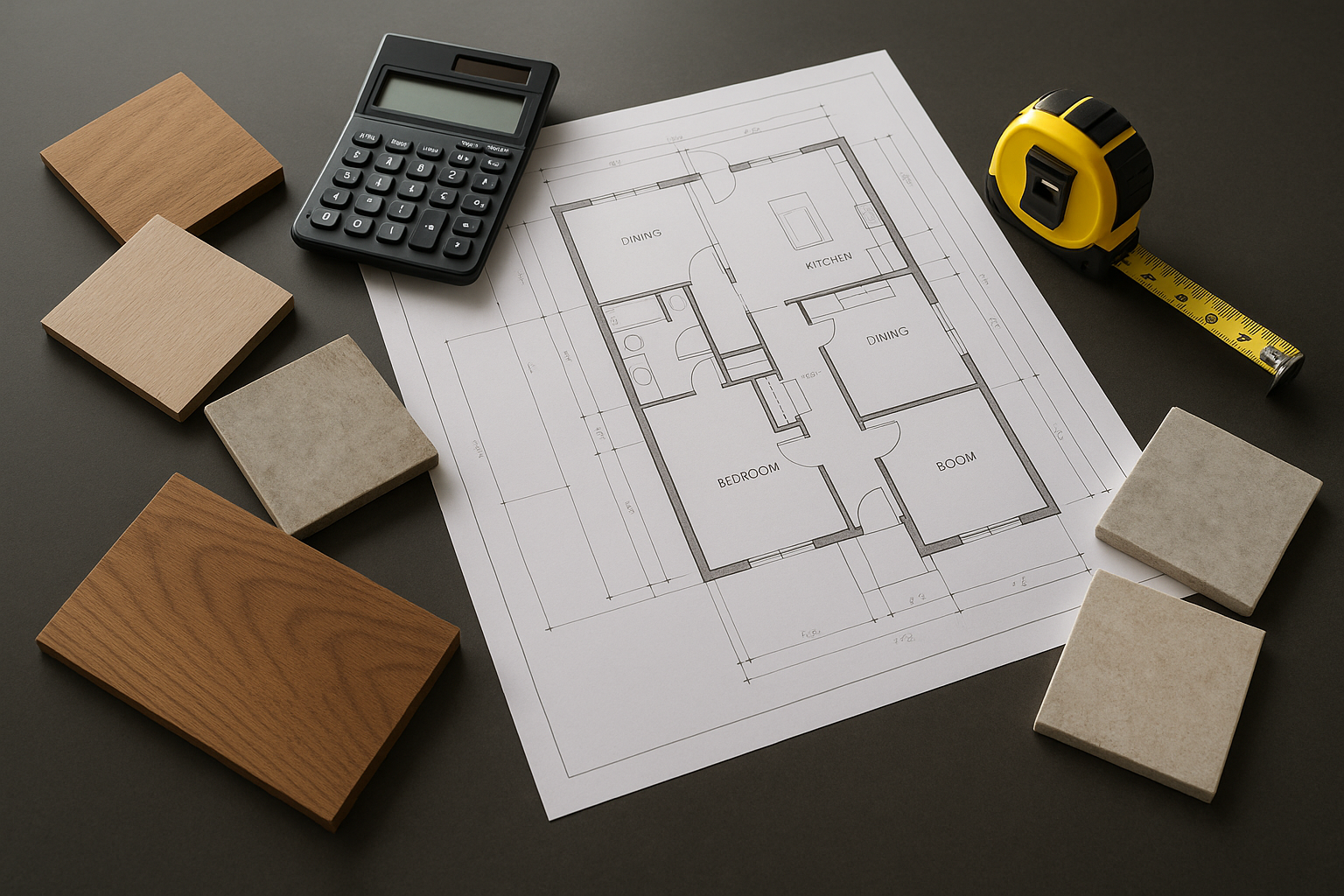
Renovating a home is one of the biggest investments most Kamloops homeowners will make outside of buying the property itself. Whether you're planning a kitchen overhaul, a basement suite, or a full-house refresh before the winter sets in, how you pay for the work matters just as much as the work itself. The right financing keeps your project moving without straining your monthly budget or forcing you to cut corners on quality.
Here's a straightforward look at how to finance a renovation in Kamloops in 2026, what rebates are available, and how to budget so there are no surprises halfway through.
Start With a Realistic Number
Before you talk to a lender, you need a defensible budget. In 2026, a mid-range kitchen renovation in Kamloops typically runs $30,000 to $70,000, a bathroom lands between $18,000 and $40,000, and finishing a basement often costs $60,000 to $120,000 depending on whether you're adding a full secondary suite. Larger additions and custom projects climb from there.
Whatever the number, build in a contingency of 10 to 15 percent. Older Kamloops homes in neighbourhoods like Brocklehurst, North Kamloops, and Sahali often hide surprises behind the walls: outdated wiring, undersized plumbing, or the need to bring things up to current BC Building Code once the work is opened up. A contingency isn't wasted money; it's the difference between a smooth project and a stalled one.
Your Main Financing Options in 2026
Most homeowners fund renovations through one of a handful of routes, and each suits a different situation.
Home equity line of credit (HELOC). For anyone with substantial equity, a HELOC is the most flexible option. You borrow against your home's value and only pay interest on what you draw. That flexibility is ideal for a phased renovation where costs come in stages. Rates are variable, so factor in that your payment can move if the Bank of Canada shifts direction.
Mortgage refinance. If you're already thinking about your mortgage renewal, rolling renovation costs into a refinanced mortgage can secure a lower rate than a line of credit and spread the cost over a longer term. This works best for larger, one-time projects like a full custom renovation or a major addition.
Home equity loan or second mortgage. A lump-sum loan with a fixed rate and set repayment schedule suits homeowners who want predictable payments and a defined end date.
Personal loans and contractor financing. For smaller projects under about $25,000, an unsecured personal line of credit can be simpler than restructuring your mortgage, though interest rates are higher. Some homeowners also use these to bridge the gap while waiting on rebate payments.
The right choice depends on your equity, how long you plan to stay in the home, and your appetite for variable versus fixed payments. It's worth a conversation with a mortgage broker who knows the Kamloops market before you commit.
Don't Leave Rebates on the Table
If your renovation touches energy efficiency, there's money available to offset the cost. The CleanBC Better Homes program continues to offer rebates in 2026 for upgrades like heat pumps, improved insulation, air sealing, and high-efficiency windows. Heat pump rebates in particular can total several thousand dollars when provincial and utility incentives are combined, and Kamloops' climate—hot, dry summers and genuinely cold winters—makes a heat pump one of the better-value upgrades you can make.
To qualify, most programs require a pre- and post-upgrade EnerGuide home evaluation from a registered energy advisor, and the work generally has to be done by eligible contractors using approved equipment. Plan for that evaluation early, because the pre-upgrade assessment usually has to happen before you start. Bundling energy upgrades into a larger renovation—say, adding insulation and air sealing while the walls are already open during a basement development—is the smartest way to capture these rebates without paying twice for access.
Budget for the Full Picture, Not Just Construction
A common budgeting mistake is planning only for the visible construction. The full cost of a Kamloops renovation also includes City of Kamloops building permit fees, which scale with the value of the work; design and drawings if you're altering the structure; and potential costs for engineering or a survey on additions. Permits are not optional, and skipping them can create serious problems when you sell or insure the home. A reputable contractor will factor permit costs and the inspection process into your quote rather than leaving them as a surprise.
It also pays to think about timing. Booking work for the fall and winter shoulder season, rather than the busy spring-to-summer rush, can sometimes mean better contractor availability and more time for careful planning. If you're financing the project, locking in your budget and lender in late summer positions you to start when you're ready rather than scrambling.
Where a Good Contractor Fits In
Financing and budgeting go hand in hand with getting an accurate estimate. A vague ballpark from an unlicensed operator can leave you under-borrowed and stuck. A detailed, transparent estimate from an established Kamloops builder gives your lender a real number to work with and gives you confidence that the scope, allowances, and contingencies are accounted for. With more than 40 years building and renovating homes across Kamloops, we've helped homeowners plan projects that fit both their vision and their financing.
Ready to Put a Real Number on Your Project?
The best first step toward financing a renovation is knowing what it will actually cost. If you're planning a project in Kamloops this fall or winter, [request a free estimate from Hodder Construction](https://www.hodder.ca/estimate) and we'll help you build a realistic, detailed budget you can take to your lender with confidence.