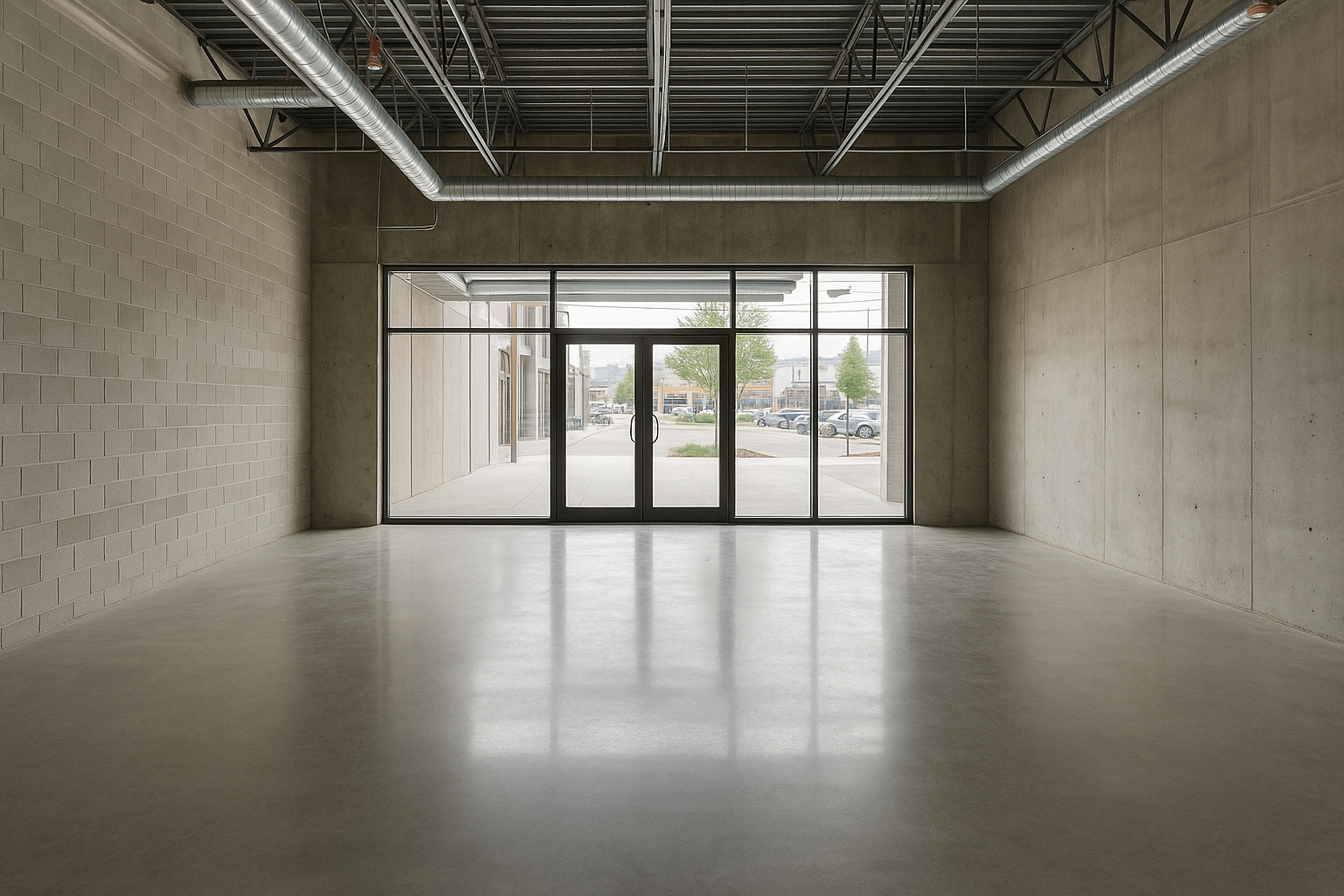
When a business signs a commercial lease, the space almost never comes ready to move into. Somewhere between the empty shell the landlord hands over and the finished storefront, office, or clinic the tenant needs, there's a long list of work — walls, wiring, HVAC, flooring, millwork, permits — and a question that trips up a lot of first-time tenants: who pays for it, and who manages it? After more than 40 years of tenant improvements in Kamloops, we can tell you that the disputes we see almost always trace back to this line being drawn fuzzily in the lease. Here's how the responsibilities usually split between landlord and tenant, and what to nail down before you sign.
Base Building vs. Tenant Improvements: The Dividing Line
Every commercial deal rests on one distinction: what belongs to the "base building" and what counts as the "tenant improvement." Base building is the landlord's responsibility — the structure, the roof, the exterior walls, the main electrical service to the suite, the primary HVAC unit, the fire sprinkler main, and often the demised walls between units. The tenant improvement is everything you do inside that shell to make the space usable for your specific business: interior partitions, finishes, lighting, plumbing fixtures, data cabling, signage, and the mechanical and electrical distribution that serves your layout.
The tricky part is that this line moves from lease to lease. In one Kamloops deal the landlord delivers the space "warm shell" — heated, with a distribution panel and a bathroom already roughed in. In the next, the tenant takes it as a bare "grey shell" with a concrete floor, an open ceiling, and a single power stub, and everything else is on them. Neither is wrong, but the two deals carry wildly different costs for the tenant, so you have to read the delivery condition carefully rather than assume. Before you sign, get a clear written description — ideally a base-building specification — of exactly what condition the space will be in on day one.
The Tenant Improvement Allowance: Whose Money Builds What
Most commercial leases in BC include a tenant improvement allowance — a dollar figure, usually quoted per square foot, that the landlord contributes toward the buildout. The allowance is real money, but it comes with strings, and understanding them is where a lot of tenants get caught. The landlord is funding the improvement, but the tenant typically manages the construction, hires the contractor, and covers any cost above the allowance out of pocket. So if your buildout runs $85 a square foot and the allowance is $50, the remaining $35 is yours.
How the money actually flows matters just as much as the amount. Some landlords pay the allowance as a reimbursement — you complete the work, submit invoices and lien waivers, and they cut a cheque — which means you need the cash or financing to carry the project until you're paid back. Others build the space themselves and simply hand over a "turnkey" suite finished to an agreed standard. And a few roll the allowance into the rent as amortized dollars, effectively lending you the improvement cost over the term. Each structure changes your risk and your cash flow, so it's worth pricing the buildout realistically before you agree to an allowance figure — a number that sounds generous can still leave a Kamloops tenant writing a large cheque at the end.
Permits, Approvals, and Who Actually Holds the Contract
Responsibility for the physical work is one thing; responsibility for the paperwork and the contract is another, and it's easy to overlook. In most Kamloops tenant improvements, the tenant is the party that pulls the building permit through the City of Kamloops, hires the design professionals and the commercial contractor, and carries the contract for the work — even when the landlord's money is funding it. That means the tenant is on the hook for the schedule, the change orders, and the coordination, and the landlord's role is largely to approve the plans and release the allowance.
Landlord approval is a step tenants routinely underestimate. Almost every lease requires the landlord to sign off on your construction drawings before a shovel moves, and any work that touches base-building systems — cutting into the roof for a new rooftop unit, tapping the main electrical service, penetrating a demising wall — usually needs specific consent and sometimes the landlord's own contractor. Building that approval loop into your timeline early keeps it from becoming the thing that delays your opening. It's also why choosing a commercial contractor in Kamloops who has worked with local landlords and knows the City's permit process is worth more than a slightly lower bid; the coordination is half the job.
Repairs, Maintenance, and What Happens at the End of the Lease
The landlord-tenant split doesn't end when construction wraps. During the term, the lease spells out who maintains what — typically the landlord keeps up the base building and structure while the tenant maintains everything inside the suite, including the improvements they installed and often the HVAC serving their space. A triple-net lease, common for Kamloops commercial and retail space, pushes most of these operating and maintenance costs onto the tenant, so read the maintenance clauses with the same care as the buildout clauses.
Then there's the end of the term, which surprises tenants years later: many leases include a "make good" or restoration clause requiring you to return the space to its original condition — removing your improvements, patching, and repainting — at your own cost when you leave. If you spent heavily on a specialized fit-out, that removal can be a real expense. Sometimes it's worth negotiating up front that certain improvements stay, or that no restoration is required, so you're not paying to build the space and then paying again to tear it out.
Quick Checklist Before You Sign
- Delivery condition: Get a written base-building spec — is it a warm shell, grey shell, or turnkey?
- Allowance amount and mechanism: How much per square foot, and is it reimbursed, turnkey, or amortized into rent?
- Scope split: Which systems (HVAC, electrical service, sprinklers, demising walls) are the landlord's, and which are yours?
- Approvals: What does the landlord need to approve, and how long does that take?
- Who holds the contract: Are you hiring the contractor and pulling the permit, or is the landlord?
- Maintenance and restoration: Who maintains the improvements during the term, and do you have to remove them at the end?
Get a Real Number Before You Commit
The single best way to protect yourself in a tenant improvement is to price the buildout accurately before the lease is signed — not after. Knowing what your space will actually cost to finish tells you whether the allowance is generous or thin, and gives you the leverage to negotiate the responsibilities that matter. If you're weighing a lease on a Kamloops commercial space and want a clear, honest estimate of what the tenant improvement will run, [request an estimate from Hodder Construction](https://www.hodder.ca/estimate). We'll walk the space, read the delivery condition, and give you a real number before you sign anything.