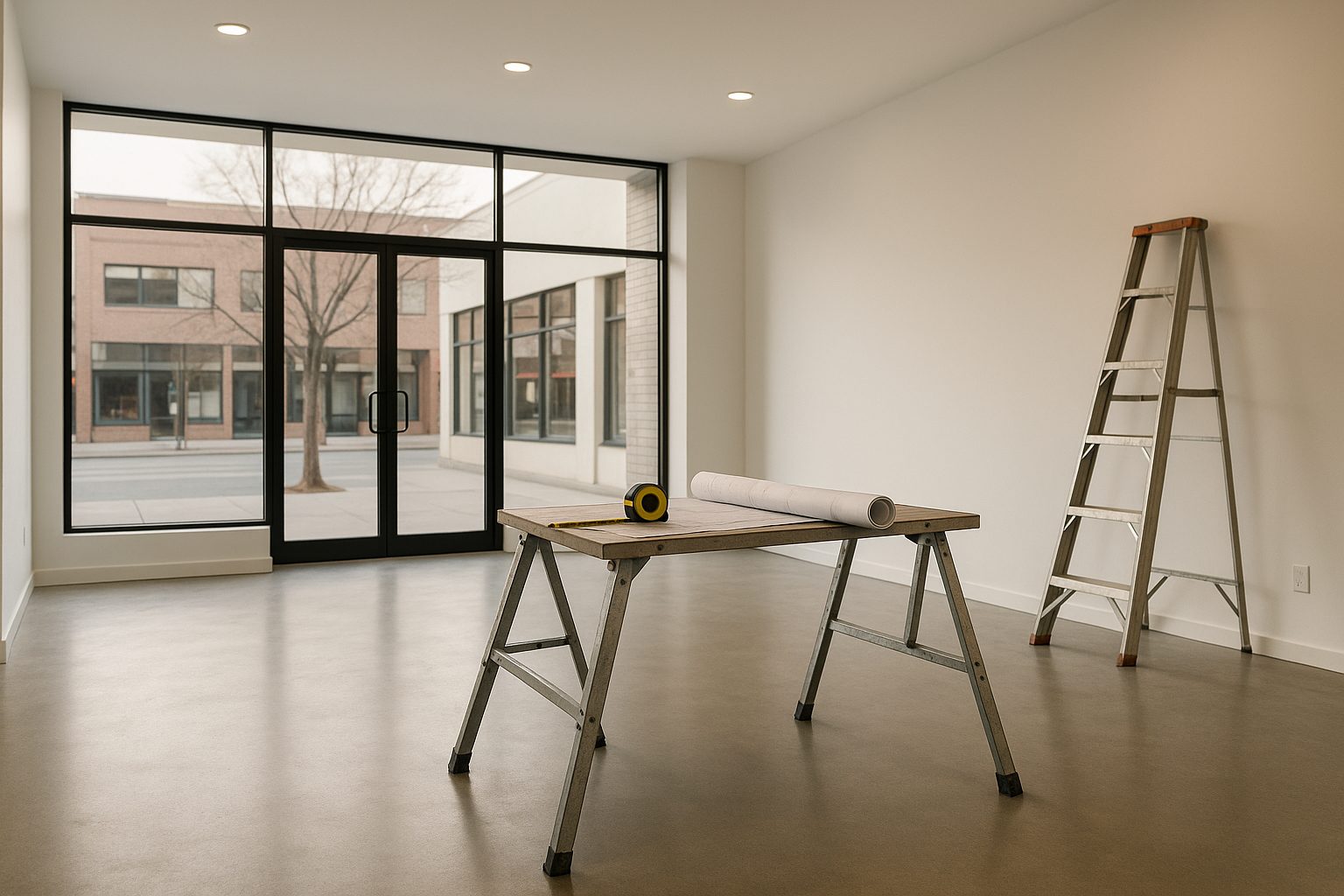
When a commercial unit turns over, the clock starts running. Every month a space sits empty is a month of lost rent, and the condition of the unit has a direct effect on how quickly it leases and what rate it commands. As a commercial contractor in Kamloops with more than 40 years of local experience, we've helped landlords across the Thompson Okanagan turn tired, vacant units into spaces that show well and lease faster. Here's what we've learned about doing it right.
Start With a Realistic Condition Assessment
Before you list the unit or promise anything to a prospective tenant, walk the space with a critical eye — or better, with a contractor who knows what tenants and their designers will flag. The items that most often hold up a Kamloops lease deal aren't cosmetic. They're the ones buried in the ceiling and behind the walls:
HVAC condition and capacity. Rooftop units near the end of their service life are one of the most common sticking points in lease negotiations. Kamloops summers push cooling systems hard, and a tenant's broker will almost always ask for the age and service history of the units. If yours are 20+ years old, budget for replacement or expect it to come off the rent.
Electrical service. Older buildings downtown and along the North Shore often have 100- or 200-amp services that won't support a modern restaurant, medical clinic, or tech office. Confirm what you have before a tenant's electrician does.
Washrooms and accessibility. A change of tenant often triggers a change of use under the BC Building Code, and that can require accessible washrooms, barrier-free entrances, and updated exiting. It's far cheaper to know this before lease negotiations than during them.
The demising condition. If you're splitting a larger unit, the demising wall, separate utility metering, and independent HVAC zones all need to be sorted out — ideally before marketing the space.
Decide What You'll Deliver: Base Building vs. Turnkey
Every landlord has to choose where their work ends and the tenant's improvements begin. In the Kamloops market, spaces are typically delivered in one of three conditions:
As-is. The tenant takes the space in its current state, usually in exchange for a larger tenant improvement allowance or a rent-free fixturing period. This works for experienced tenants with their own contractors, but it narrows your pool of prospects.
Base building (shell or "vanilla shell"). You deliver clean, code-compliant bones: demised walls, a level floor, capped utilities, basic lighting, an accessible washroom, and functioning HVAC. This is the sweet spot for most landlords — it lets tenants of many different types picture their own fit-out without you over-investing in finishes they'll tear out.
Turnkey. You build the space to the tenant's specification and recover the cost through rent. This is most common with national tenants and franchise operators who have standard build packages. It requires tight cost control on your side, which is where a fixed-scope agreement with your contractor matters.
There's no single right answer, but there is a wrong one: leaving the decision until a tenant is at the table. Landlords who prepare a base building scope — with pricing — before marketing a unit consistently close deals faster, because they can answer the "what will you give us?" question with numbers instead of guesses.
Understand the Permit Picture Before You Promise Dates
Timeline surprises kill deals. In our experience, the two schedule items landlords most often underestimate are permits and long-lead equipment.
A straightforward interior renovation with no change of use can often proceed quickly, but a change of use — say, retail to restaurant, or office to medical — brings the full weight of the building code review: ventilation, grease interceptors, plumbing fixture counts, fire separations, and accessibility upgrades. Build permit review time into any date you commit to a tenant, and remember that the City of Kamloops, like most municipalities, processes tenant improvement permits faster when the drawings are complete and code compliance is clearly documented the first time. Incomplete applications are the number one cause of permit delays we see.
On equipment: rooftop HVAC units, electrical switchgear, and custom storefront glazing can carry lead times of eight to sixteen weeks. If your unit needs any of these, order early — ideally before the lease is even signed, if the work is part of your base building scope regardless of who the tenant turns out to be.
Spend Where Tenants Actually Look
Not all improvement dollars are equal. Based on what we see move the needle in Kamloops leasing, prioritize in this order:
1. Mechanical and electrical systems. Invisible, unglamorous, and the first thing a serious tenant's due diligence will examine. Sound systems support higher rents and shorter negotiations.
2. Storefront and entrance. Curb appeal isn't just residential. New glazing, signage-ready fascia, and a clean entrance dramatically change how a space shows.
3. Washrooms. A dated washroom tells prospects the whole building is dated. A modern, accessible washroom is one of the highest-impact investments per dollar in a commercial unit.
4. Lighting and ceilings. Replacing yellowed T-bar tile and old fluorescent fixtures with clean tile and LED lighting transforms a showing for relatively modest cost.
5. Flooring and paint. Last, not first — many tenants will change these anyway. Neutral and clean beats expensive and specific.
Common Questions from Kamloops Landlords
Should I renovate before or after signing a tenant? Do the base building work (systems, code compliance, demising) before or during marketing; hold tenant-specific improvements until the lease is signed. This keeps the space flexible while eliminating the deal-killers.
Who pays for what? Typically the landlord delivers the base building and contributes a tenant improvement allowance toward the tenant's fit-out. The split is negotiable and varies with lease term and covenant strength — a longer lease from a strong tenant justifies a bigger contribution.
Can the work happen while the building is occupied? Usually, yes. We regularly complete tenant improvement and turnover work in occupied buildings across Kamloops, scheduling noisy work around neighbouring tenants' hours and maintaining safe access throughout.
How long does a typical turnover take? A cosmetic refresh can be done in two to four weeks. A base building upgrade with mechanical work and permits typically runs two to four months. A change of use with significant code upgrades can take longer — which is exactly why early planning pays.
Get Your Space Lease-Ready
A vacant unit is a cost; a well-prepared one is an asset. Hodder Construction has been helping Kamloops property owners renovate, demise, and upgrade commercial spaces for over four decades, from single storefronts to full building repositioning. If you have a vacancy coming up — or a unit that's been sitting too long — talk to us early. We'll walk the space, flag the issues a tenant will find, and give you a clear scope and budget to work from.
[Request a free estimate from Hodder Construction](https://www.hodder.ca/estimate) and get your commercial space ready for its next tenant.